

If you're on this page there's a good chance you've got a great idea for a new SaaS product or mobile app.
Or perhaps you want to build a cool new software tool or app for your current business?
Designing and creating your own software product is an exciting and rewarding project.
But... it can also be a risky venture. Custom development projects can eat up lots of time and money, without finishing and shipping your product.
Traditionally, designing and building software has been similar to designing and building physical one-time products such as building a family home.
You spend heaps of time brainstorming, planning, and deciding on each and every feature your product will have. You then turn all this into a blueprint and follow on by spending months of design, coding and testing.
After months (and sometimes years) you hopefully launch to excited users who love your product — that's if you're lucky enough not to have changed your mind halfway through (which would lead to big delays with rewrites and redesigns).
The scary thing is, after all that time and money spent, how do you know your product will be successful? Will enough customers use it and keep using it?
Building a digital product can be expensive, and there's no guarantee of success.
Is there a way to build your product without risking so much time and money?
In 2011, Eric Ries published The Lean Startup. Now a must-read in the startup community, the book recognises the huge risks involved in starting a startup, and explores a simple methodology for launching products with minimal risk and maximum reward potential.
Instead of hiring expensive designers and software engineers and building a complete product that takes months or even years, the lean approach is to reduce your scope down to a Minimum Viable Product, or "MVP."
"Find a judo solution, one that delivers maximum efficiency with minimum effort."
— Jason Fried, ReWork
Ask yourself:
- How could I build an MVP version of my product in a matter of days or weeks, instead of months?
- What core functionality should I focus on and leave all other features to a future version?
How simple should your MVP be?
How much should you reduce your idea down to?
The ideal length of time to launch an MVP is 6 weeks (30 working days) or less.
Intercom, Buffer and Basecamp are examples of companies that follow this exact principle. All projects that they work on can be shipped in six weeks or less. From there, they iterate and improve in future cycles.
What can be built in 30 days or less?
In our book, The 30 Day Startup (which, by the way, we wrote in 30 days), we discuss in detail how many startup founders developed a functional product after spending less than 30 days building it.
Some products were even finished in one weekend.
In all of these cases, the founders were tempted to take more time and add more features. But the value of launching early and getting feedback from real customers is something that's comforting to doubt but hard to regret.
Successful Startups Built in 30 Days or Less
Buffer
7 weeks to build the first version
It now has a $18.6M annual run rate
Egghead.io
It took two weeks to build the first version
It now has a $3.3M annual run rate
Baremetrics
It took seven days to build the first version
It now has a $1.3M annual run rate
Loot Crate
It took two days to build the first version
It now has an $115M annual run rate
ProductHunt
Less than one day to build the first version
It was acquired for $20M
WP Curve
One week to build the first version
It was acquired by GoDaddy
iDoneThis
Two weeks to build the first version
It now has a $7.6M annual run rate
Proof
Proof took one weekend to build the first version
It now has a $2M annual run rate

Dollar Shave Club
It took six weeks to build the first version
The startup was acquired for $1B
"The advice I always give is to help early stage startups focus... cut as much as possible out of the first version of the product. That way, when you launch, you'll hopefully have fairly binary feedback: either people love that one feature, or they don't find it useful. It's easier to figure out what to do next. My advice would always be love, then to launch with a bunch of things and figure out what is working and what isn't."
— Joel Gascoigne, Founder of Buffer
What if your product really can't be built in 30 days?
Sometimes it's not possible to build a fully functioning MVP in six weeks. Maybe the problem you're solving is too complex? Or maybe you don't have the skills/resources to build it yourself?
But remember, the purpose of an MVP is to validate your product idea and find out the potential market for it. This doesn't mean you need to build a working version of the product.
Here are some of the ways successful startups have launched without even having a functioning product:
The Landing Page MVP
Dropbox is a hugely successful startup valued at $9.7B. It's a product that solved a real issue. But how do you build a functional MVP for a product that needs to work perfectly?
"While you want to launch fast and iterate, people don't think it's very fun when their data doesn't show up."
— Drew Houston, Founder of Dropbox
Instead of risking millions on an untested idea, Drew Houston created a screencast video demonstrating how Dropbox worked, posted it on a simple webpage, and placed an email signup form below the video for people to register their interest.
Concierge MVP
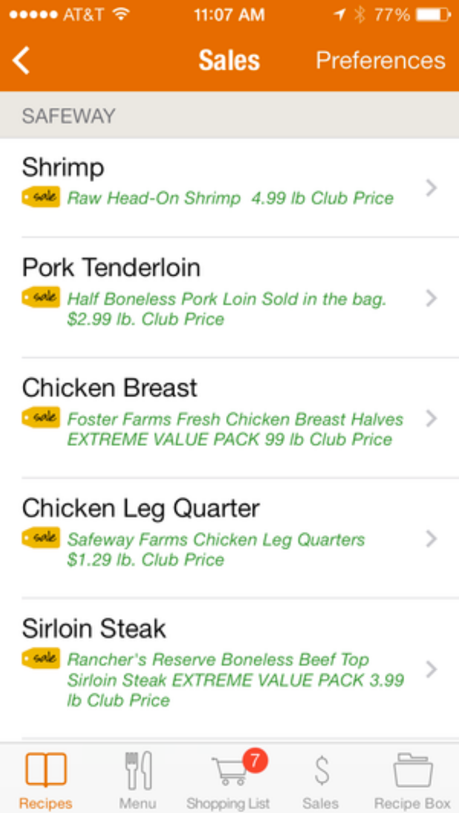
Food on the Table is a mobile app that was acquired by Food Network in 2014. It gathers food preferences and then suggests recipes based on current specials in stores nearby, to help you cook tasty and cheap dinners.
When Manuel Rosso founded the company, he wanted to check if his business model would work before building the app.
What he ended up doing, is manually interviewing people, finding out their preferences and budgets, and then going to their local supermarket where he compiled shopping lists based on current specials.
Only once he'd refined his process and had satisfied users did he go and develop it into an app.
Wizard of Oz MVP
Airbnb and Zappos are massively successful startups that had seemingly crazy ideas that needed to be tested first.
Airbnb tested out their assumptions by building a website and selling beds (air mattresses) in their own house.
Zappos tested out whether online shoe shopping would work by setting a deal with their local shoe store. All orders were fulfilled by simply purchasing shoes directly from the retail store after an order was made.
The front end is a complete software-based (website or mobile app), but behind the scenes it's simply employees acting in a human role to manually do things.
Email Product MVP

Product Hunt is a popular website where people find, share and discuss new technology products. When Ryan Hoover, the founder of Product Hunt, came up with the idea, he wanted to test the demand for such a website before spending months building the entire site.
He did this by starting with nothing more than an email list. He invited contributors and people could share links and discover new products by email.
Piecemeal MVP
Start-up ideas are usually creating something entirely new. Often the best way to validate your product idea is to replicate it using a collection of off-the-shelf tools and services.
When Andrew Mason founded Groupon, he started with a WordPress blog, posting restaurant deals. If enough people showed interest in a deal, he generated PDF coupons using AppleScript and emailed them via Apple Mail.
It's up to you. How are you going to build your MVP?
"It's not about ideas. It's about making ideas happen."
— Scott Belsky, Co-founder of Behance
Take your idea and build the simplest version that your users will find valuable enough to use. The value of launching early and gathering real customer feedback outweighs additional development time. Successful founders consistently report they could have launched sooner.